
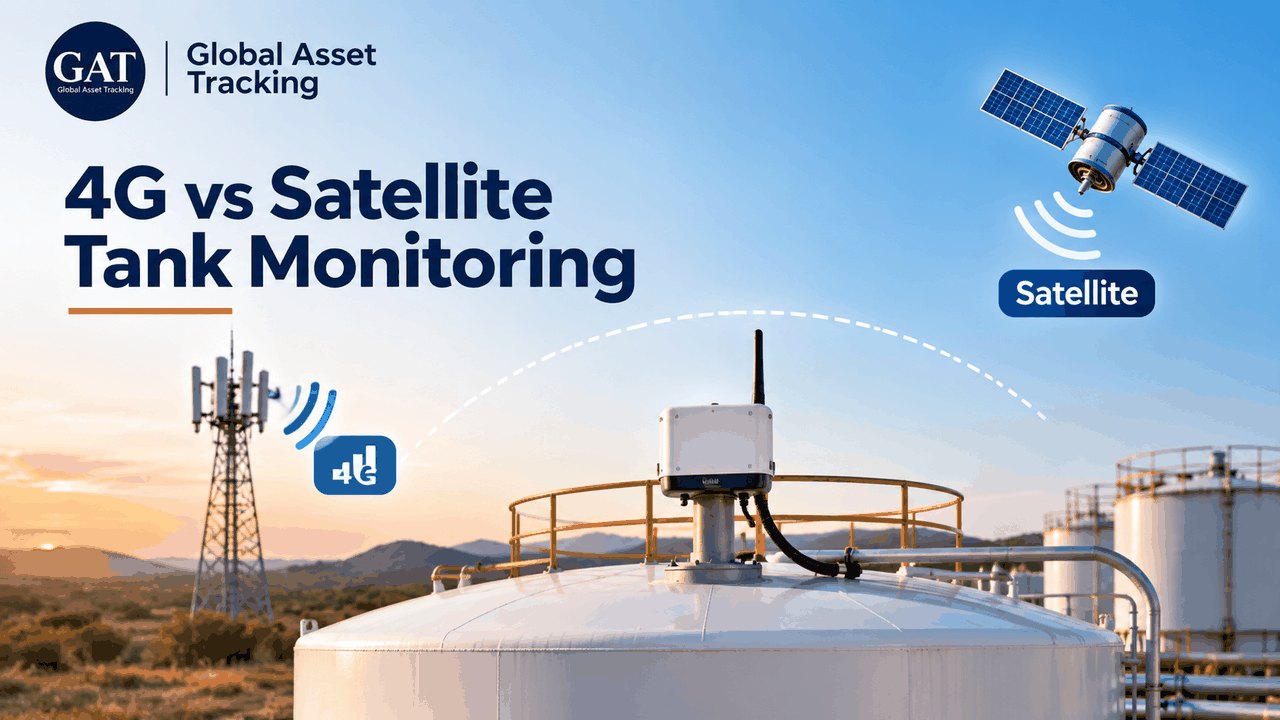
4G vs Satellite Tank Monitoring: How to Monitor Tanks Where Mobile Coverage Is Unavailable
4G tank monitoring works where mobile coverage is available, while satellite connectivity helps monitor tanks in remote locations without a mobile signal. Learn how combined 4G and satellite monitoring from GAT Solutions can provide better tank visibility across different sites worldwide.
What Is 4G Tank Monitoring?
4G tank monitoring uses a cellular network to send tank-level information from a monitoring device to an online platform. A sensor measures the liquid inside a tank, and the connected device sends the reading through an available 4G mobile network.
This allows authorised users to check tank levels remotely instead of depending only on manual inspections.
4G monitoring is a practical option for locations with reliable mobile coverage, such as fuel depots, distribution centres, workshops, farms and industrial facilities.
Some common benefits include:
- Remote access to tank-level information.
- Regular updates without manual tank checks.
- Easier fuel and lubricant inventory planning.
- Better visibility across multiple storage locations.
- Convenient reporting for operations and supply teams.
However, 4G depends on mobile network coverage. If a tank is installed in an isolated mining area, a remote farm or an offshore location without a suitable cellular signal, a standard 4G-only monitoring device may not be able to send its readings.
What Is Satellite Tank Monitoring?
Satellite tank monitoring uses satellite communication to transmit tank data instead of relying on a nearby mobile tower. This makes it useful for locations where normal cellular coverage is unavailable.
A compatible monitoring device collects information about the tank and sends it through a satellite connection. The data can then be made available through the monitoring platform or reporting system.
Satellite connectivity can be useful for:
- Remote mining operations.
- Isolated farms and agricultural properties.
- Oil and gas facilities.
- Offshore locations.
- Remote fuel storage sites.
- Tanks located far from towns and mobile infrastructure.
The main advantage is that monitoring does not have to depend on a local 4G signal. However, satellite systems still require compatible equipment, an available service and suitable installation conditions. Capabilities can vary depending on the technology used.
4G vs Satellite Tank Monitoring: What Is the Difference?
Both technologies help send tank information to a remote platform, but they work in different ways.
1. Network Coverage
4G: Uses nearby mobile network infrastructure. It works when the location has a suitable cellular signal and the monitoring device supports the local network.
Satellite: Uses satellite communication and can provide connectivity in many areas beyond normal mobile network coverage. Actual availability depends on the satellite service and operating region.
2. Suitable Locations
4G: Often suits towns, industrial areas, fuel depots, workshops and other locations with established mobile coverage.
Satellite: Is useful for remote sites, isolated facilities and locations where a reliable mobile signal is not available.
3. Data Transmission
Both options can transmit tank-level readings and other monitoring information. For routine tank monitoring, the amount of data required is generally small.
However, satellite services can differ in their data limits, update frequency and communication performance. Businesses should check the capabilities of the specific system before choosing it.
4. Operating Costs
The cost of a monitoring solution depends on more than its connection type. Hardware, installation, service plans, reporting requirements and the number of tanks can all affect the total cost.
4G may be a suitable choice where mobile service is readily available. Satellite may involve different equipment or service costs, but it can make monitoring possible where a mobile connection cannot be used.
The best option is the one that meets the site’s communication needs without adding unnecessary complexity.
What Happens When a Tank Is Located Where There Is No Mobile Coverage?
A monitoring device that relies only on 4G may stop sending new readings when it cannot connect to a suitable mobile network. The tank may still contain fuel or another liquid, but the remote team will not receive updated information through that connection.
This creates a visibility problem. Staff may need to visit the site to check the tank manually, or they may have to make decisions using older readings.
For businesses managing tanks across different regions, this can make inventory and delivery planning more difficult.
Satellite connectivity provides another way to send tank information from locations outside normal mobile coverage. Instead of depending entirely on a cellular network, the monitoring device can use a compatible satellite connection.
This is why it is important to consider connectivity before installing a remote tank monitoring system. You can learn more about GAT’s 4G and satellite coverage.
Why Automatic 4G and Satellite Switching Makes a Difference
Some monitoring solutions require businesses to choose between cellular and satellite equipment based on the installation location. This can become complicated when tanks are spread across different regions or regularly moved between sites.
A system that supports both connectivity options can offer greater flexibility.
GAT Solutions uses monitoring units that automatically select 4G where mobile coverage is available and satellite where it is not. The same unit can switch between the available connections without requiring the user to choose the network manually.
This can be useful for businesses managing fixed storage tanks, mobile fuel tanks, trailers and other liquid storage assets.
For mobile tanks, the system can also report fluid levels and GPS location. This gives operators useful information about both how much liquid is stored and where the asset is located.
Explore GAT’s remote tank monitoring solutions to understand how this approach can support different storage locations.
What Types of Tanks Can Be Monitored?
Tank monitoring is not limited to large fuel storage facilities. Businesses use different types of tanks and containers to store liquids needed for daily operations.
Depending on the equipment and installation requirements, monitoring may be suitable for:
- Bulk diesel and petrol tanks.
- Lubricant and chemical IBCs.
- Storage drums.
- Mobile tanks and trailers.
- Grease and waste oil bins.
- Water storage tanks.
GAT Solutions supports monitoring across a range of fixed and mobile liquid storage assets. You can explore the types of tanks and liquids GAT monitors to see the available applications.
What Should You Check Before Choosing a Tank Monitoring System?
Before selecting a 4G, satellite or combined solution, consider the following points.
1. Check every tank location: Do not assume that all sites have the same mobile coverage. Review the actual signal conditions where each tank is installed.
2. Understand your monitoring requirements: Decide how often you need tank readings and who needs access to the information.
3. Consider fixed and mobile tanks: If tanks move between locations, check whether the system can continue reporting across different network conditions.
4. Review reporting options: Look for clear information about remaining liquid, safe fill levels, percentage full and the time of the latest update.
5. Check installation requirements: Confirm whether the equipment needs external power, Wi-Fi, cabling or modifications to the tank.
A little planning before installation can help avoid connectivity problems later.
Monitor Tanks in Remote Locations With GAT Solutions
Businesses should not have to lose visibility of their tank inventory simply because a storage site is outside mobile network coverage. With the right monitoring technology, fuel, lubricants, chemicals and other liquids can be tracked across connected and remote locations.
GAT Solutions provides remote tank level monitoring using 4G and satellite connectivity. Each monitoring unit automatically selects the available connection, using 4G where mobile coverage is available and satellite where it is not.
The system is designed for fixed and mobile tanks, with fluid-level and GPS location information available through GAT’s reporting platform.
Whether you manage fuel tanks at a mining site, lubricant storage at a workshop or liquid assets across multiple remote locations, better visibility can support more informed inventory and delivery decisions.
Visit GAT Solutions to explore remote tank monitoring or request a tank assessment for your business.